
Imagine a review meeting on a Tuesday afternoon. A partner is looking at a number in a draft and asks a simple question. "Where did this come from?"
The senior on the engagement says the AI pulled it together. The partner asks again. "From which document?" Nobody in the room can say.
The number may be right. That is not the problem. The problem is that nobody can show why it is right.
A good answer is not enough
This is the part of AI that firms feel first. The answers sound confident, and they are often useful. But your name goes on the work, not the tool’s name. When a partner, a client or a reviewer asks how you got there, “the AI said so” is not an answer.
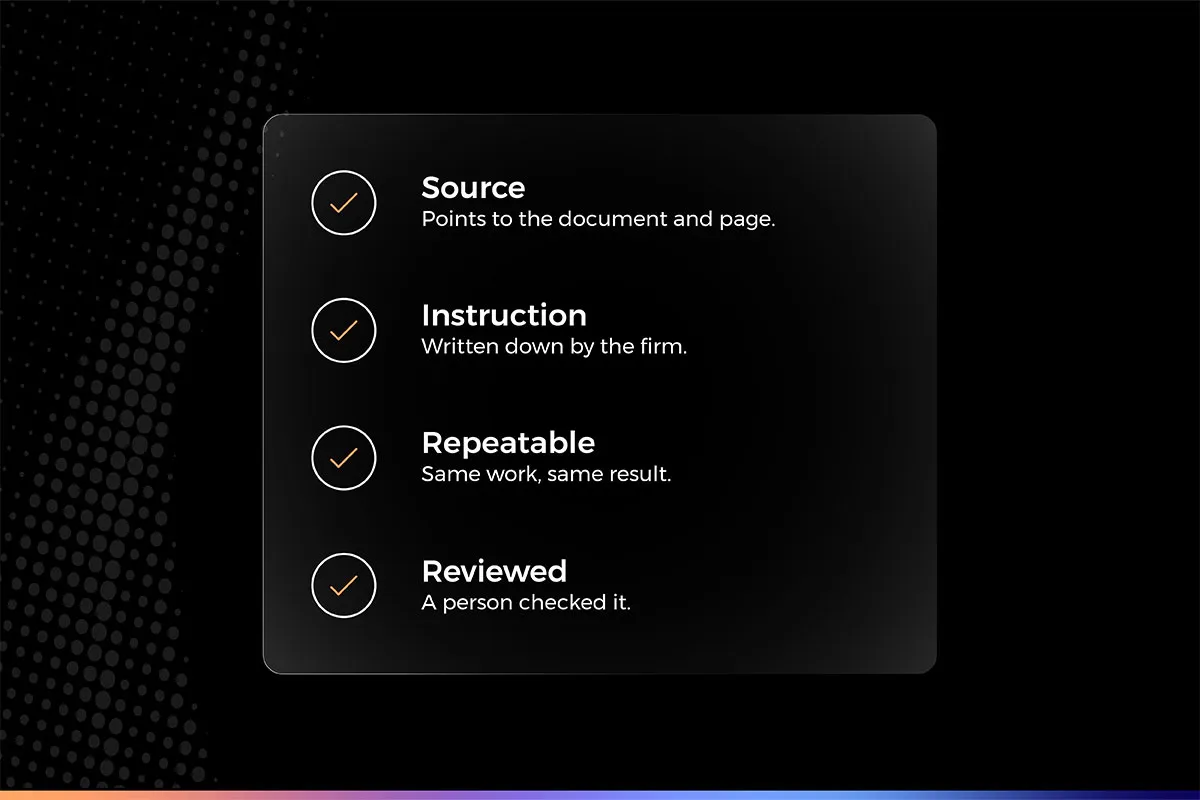
We call an answer defensible when you can stand behind it and show your work. Four questions tell you whether you can.
Four questions that tell you
1. Where did the information come from?
A defensible answer points to its source. The document, the page, the line. Think of a footnote. A figure with a footnote can be checked in a minute. A figure without one has to be taken on trust.
2. What was it asked to do?
Picture two seniors using the same tool on the same documents. One types “summarize this.” The other types “summarize this and list the exceptions.” They get different results, and neither can say which instruction the firm would have chosen. A defensible answer comes from a written instruction your firm decided on, not from whatever someone typed at 6 p.m.
3. Can you get the same answer again?
Run the same work next week. Do you reach the same result? If the answer changes every time, it is hard to rely on, and harder to defend. Work you can repeat is work you can explain.
4. Who checked it?
Someone at the firm should review the result and own it. Not as a formality. As a step built into the work that leaves a record. A review nobody can see did not happen, as far as anyone outside the room can tell.
“Your name goes on the work, not the tool’s name.”
A two minute test for your firm
You do not need to be technical to use these questions. Take one result your team got from AI last week. Ask the four questions out loud.
Can someone point to the source? Is there a written instruction behind it? Could you run it again and expect the same thing? Is there a record that a person reviewed it?
If the answer to any of them is no, you have found the place to fix first. It is a much better thing to find on a quiet Monday than in a review meeting.
What changes when you can answer all four
A firm that can answer these questions does not have to hold AI at arm’s length. It can use AI for the slow, heavy parts of the work, because every result comes with its trail. The partner asks “where did this come from?” and the answer is on the page.
That is the real shift. AI stops being something you hope is right and becomes something you can check.
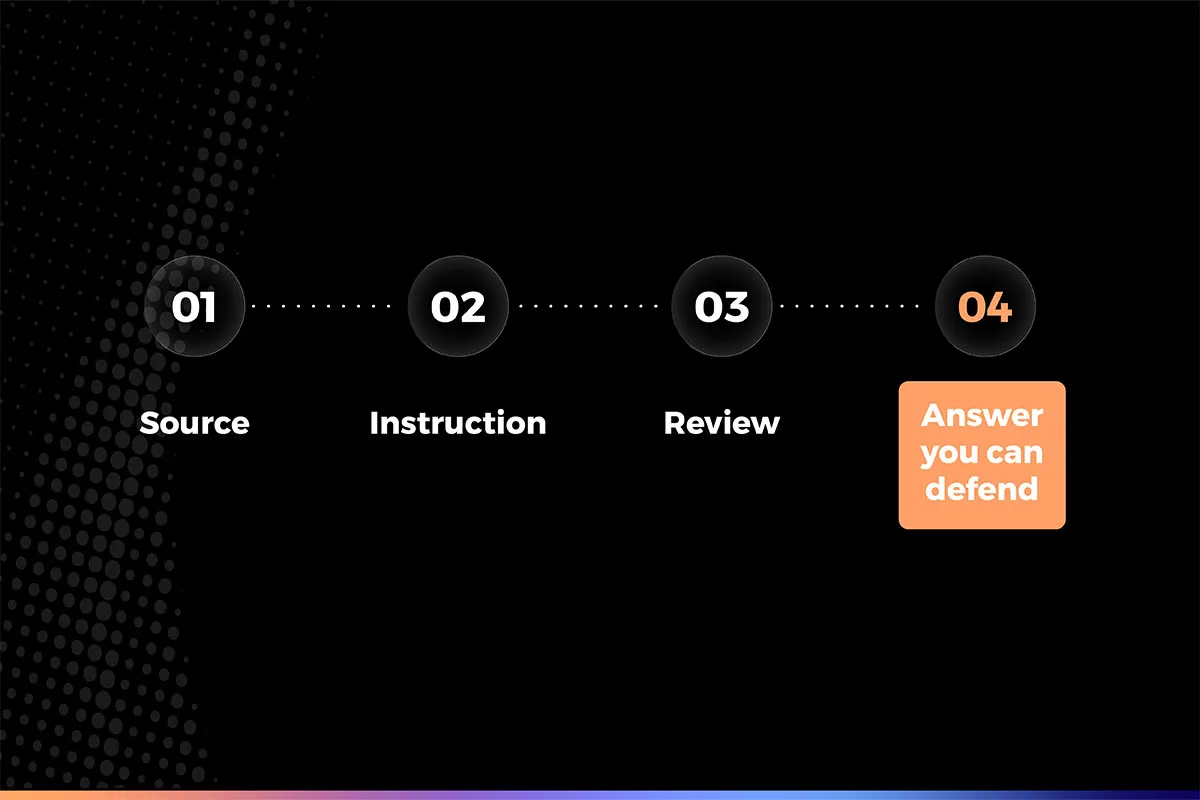
This is the standard we built Vista to meet. Vista is the Private AI from Archivista, made for firms that handle sensitive information. It works from the firm’s own documents and the firm’s own written process, inside an environment built for the firm, so each step can be traced.